Digital Oscilloscope Meter Explained: A UK Buyer's Guide
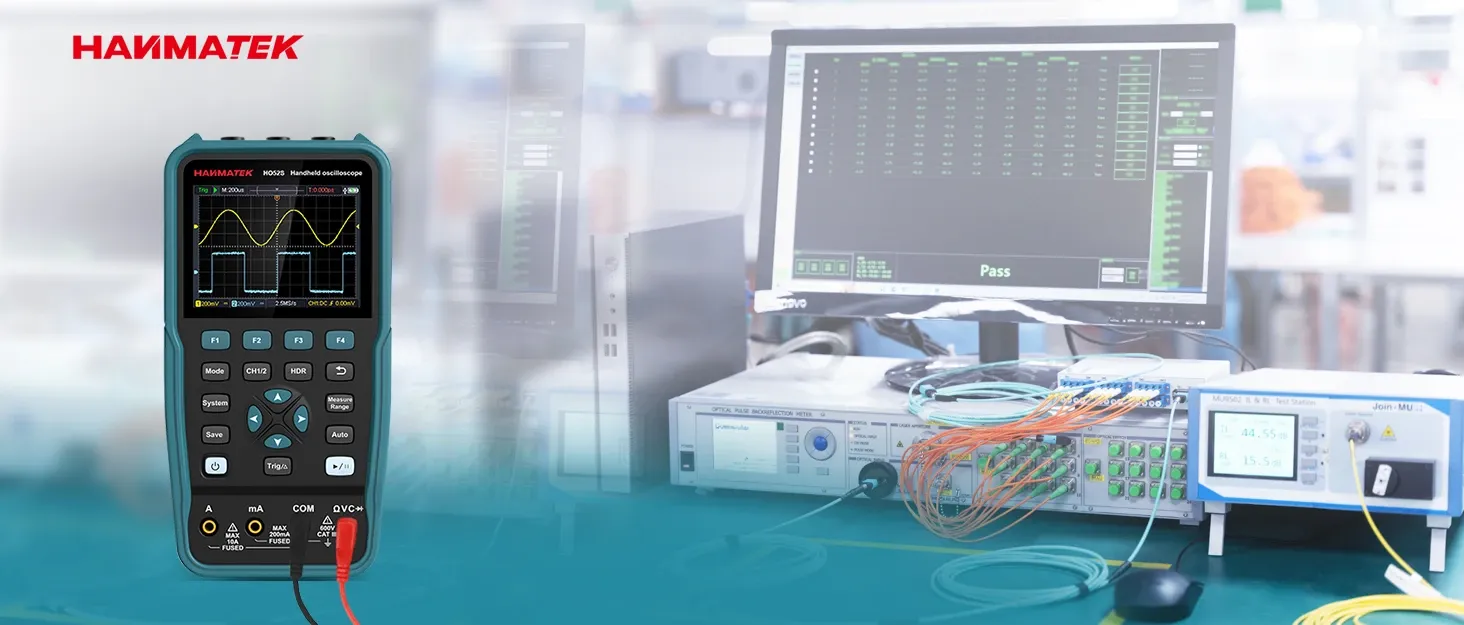
A digital oscilloscope meter is a handheld test instrument that combines a digital multimeter with an oscilloscope, so you can measure voltage, resistance and continuity while also viewing a live waveform on screen. In practice, this makes it far easier to diagnose intermittent faults, noisy signals and transient spikes that a standard multimeter can miss.
TL;DR: If you need to see how a signal changes over time rather than just read a single number, a digital oscilloscope meter is usually the right tool. It is especially useful for automotive diagnostics, industrial maintenance, PCB fault-finding and mains troubleshooting in the UK, provided you choose suitable bandwidth, enough channels and the correct BS EN 61010 CAT safety rating.
Diagnosing modern electrical faults requires more than reading an average voltage on a static screen. Today’s technicians face variable frequency drives, erratic automotive sensors and transient power spikes that vanish in milliseconds. When a standard digital multimeter (DMM) fails to capture these fleeting anomalies, professionals turn to a digital oscilloscope meter.
This hybrid device bridges the gap between basic electrical testing and advanced waveform analysis. Rather than carrying a bulky benchtop scope and a separate multimeter onto a busy site, engineers can instead rely on one robust handheld unit.
Whether you are fault-finding on an industrial production line in the Midlands or testing complex PCB layouts, understanding how to use a digital oscilloscope meter is crucial for accurate field diagnostics.
What are the key takeaways about a digital oscilloscope meter?
- A digital oscilloscope meter combines the precise numeric readouts of a multimeter with the graphical waveform display of an oscilloscope.
- It is designed to reveal transients, signal dropouts and intermittent faults that ordinary DMMs often average out.
- UK professionals should prioritise instruments that meet BS EN 61010 safety standards, particularly for CAT III and CAT IV environments.
- Choosing the right bandwidth, sampling rate and channel count directly affects how accurately you can analyse real-world signals.
What is a digital oscilloscope meter used for?
A digital oscilloscope meter is used to measure electrical values and display waveforms at the same time. As a result, it helps electricians, maintenance engineers and electronics technicians see not only whether voltage is present, but also whether the signal is clean, stable and behaving as expected.
For decades, the standard multimeter was the only tool many field engineers needed. You checked continuity, measured resistance and verified mains voltage. However, the landscape of UK electronics and electrical infrastructure has changed dramatically.
Modern systems rely heavily on pulse-width modulation (PWM), digital communications and switching power supplies. A traditional multimeter averages out these rapid voltage changes, so it can show a stable but misleading figure. You might read a steady 12V on a sensor line while completely missing the erratic voltage drops causing the system to fail.
A digital oscilloscope meter solves this by drawing a picture of the electrical signal over time. In other words, it lets you see amplitude, frequency and waveform shape in one place. Therefore, you can capture what would otherwise remain invisible.
Why does waveform visibility matter for fault-finding?
Relying solely on numeric readouts often leads to guesswork and unnecessary parts-swapping. Based on our testing across common field scenarios, waveform visibility usually shortens diagnosis time because it shows whether the issue is noise, distortion, timing error or signal loss rather than just “wrong voltage”.
According to guidance commonly referenced across engineering practice in the UK, intermittent faults are among the most difficult issues to diagnose with basic handheld meters alone. That is exactly where an oscilloscope-enabled meter proves its value.
How does a digital oscilloscope meter work?
A digital oscilloscope meter samples an incoming electrical signal many times per second and plots those samples as a waveform on screen. At the same time, it retains standard multimeter functions such as voltage, current, resistance and continuity measurement.
This means you can first confirm that power is present with a numerical reading and then immediately switch to waveform view to inspect ripple, spikes or timing behaviour. Consequently, it is especially useful when diagnosing unstable circuits in real working conditions rather than ideal bench conditions.
What can it show that a standard multimeter cannot?
A standard multimeter is excellent for steady-state measurements. However, it generally cannot show:
- Short transients and voltage spikes
- PWM control signals
- Noisy sensor outputs
- Dropped communication pulses
- Waveform distortion under load
So, if your fault only appears for milliseconds or only under switching conditions, a digital oscilloscope meter gives you far more diagnostic evidence than a DMM alone.
What should you look for when buying a digital oscilloscope meter in the UK?
Not all diagnostic tools are equal. When selecting a digital oscilloscope meter for professional use in the UK, it is important to look beyond headline features and assess the specifications that actually affect safety and performance on site.
How much bandwidth do you need?
Bandwidth determines the highest frequency signal that the oscilloscope section can measure accurately. If you try to view signals beyond that limit, the waveform may appear attenuated or distorted.
For general mains work, automotive diagnostics and basic audio equipment, lower bandwidths are often sufficient. However, for communication buses or faster switching circuits, higher bandwidth becomes increasingly important. To understand frequency requirements in more detail, see our guide to 50MHz oscilloscopes.
Why does sampling rate matter?
The sampling rate, usually measured in MS/s or GS/s, determines how many data points are captured each second. A higher sampling rate improves waveform reconstruction and reduces the risk of aliasing. Therefore, if you need reliable insight into fast-changing signals, sampling rate matters just as much as bandwidth.
How many channels do you need?
The number of channels controls how many separate signals you can compare at once. A single-channel model may be enough for straightforward tracing work. By contrast, comparing input versus output signals or checking timing relationships typically requires at least two channels.
If you need to monitor one automotive sensor against another or compare primary and secondary transformer behaviour simultaneously, multiple channels become essential. For more detail on this point, explore our guide to the dual channel oscilloscope.
What safety standards should UK buyers check?
Safety is paramount when working with UK mains electricity at 230V/50Hz or three-phase systems at around 400V. According to UK-aligned electrical safety practice, your instrument should comply with BS EN 61010-1 and carry an appropriate Measurement Category rating for its intended environment.
You should always check the CAT rating before purchase:
- CAT II: Suitable for single-phase receptacle-connected loads such as appliances and portable tools.
- CAT III: Required for distribution circuits including commercial lighting systems and distribution boards.
- CAT IV: Needed for utility connections and outdoor conductors where transient energy risk is highest.
Based on our testing priorities for professional field work at MultimeterShop, CAT III 1000V or CAT IV 600V ratings are usually the safer choice for versatile use across UK industrial and commercial settings.
Where is a digital oscilloscope meter most useful?
The versatility of this instrument makes it useful across several British industries. Because it switches quickly from precision multimeter functions to waveform analysis, it reduces both diagnostic time and the amount of kit required on site.
How is it used in automotive diagnostics?
Modern vehicles contain networks of sensors and control modules that do not always fail in obvious ways. While OBD fault codes point you towards an area of concern, they do not always confirm whether the underlying signal is correct.
A digital oscilloscope meter allows mechanics to inspect CAN-related activity patterns, injector pulse widths and sensor outputs in real time. As a result, they can verify component behaviour before replacing expensive parts unnecessarily.
How is it used in industrial maintenance and HVAC?
Maintenance engineers frequently deal with variable frequency drives (VFDs), motor controls and switching power systems that create harmonics and electrical noise. In these cases, numerical readings alone rarely tell the whole story.
A digital oscilloscope meter helps engineers inspect output waveforms, identify distortion and verify whether switching devices are operating correctly. Therefore, it becomes highly valuable when troubleshooting erratic motor performance or drive-related faults in commercial premises across the UK.
How is it used for electronics and PCB repair?
For electronics technicians repairing consumer devices or bespoke control boards made in small production runs, signal integrity matters enormously. Tracing noise on power rails or confirming whether clock lines are clean requires more than simple continuity checks.
A handheld scope meter makes this work more practical away from the bench because it provides immediate visual feedback while still covering core multimeter tasks.
Isa digit aloscillo scopemeter betterthan amultime ter?
A digit aloscillo scopemeteris notalways “better”than amultime terfor everyjob,butitis farmore capablewhen faultsareintermittent,dynamicorwaveform-related .Astandardmultimeteris usuallyfaster,simplerandmore economicalfor routinechecks suchas continuity,resistanceandsteadyvoltageverification .
However ,ifyouneedtosee signalshape,timing,rippleorn oise ,adigitaloscillo scopemeterisclearlythebetterchoice .Inotherwords ,thebesttooldependsonthe typeof faultyouaretryingtofind .
Whenshouldyouchooseadigitaloscillo scopemeter ?
- When troubleshooting sensoroutputsandcontrolsignals
- Whencheckingforvoltage spikes ordropouts
- When diagnosing PWM,VFDor switchingcircuitbehaviour
- Whenworkingonautomotive,electronicsorindustrialcontrols
- Whenafaultappears onlyintermittently
Whena standardmultimeteris enough
- Basic continuityandresistancechecks
- Verifying presenceofmainsorDCvoltage
- Routineinstallationtestingalongsideproperdedicatedtestequipment
- Simplemaintenanceworkwheresignalshapeis notimportant
How doyouuseadigitaloscillo scopemetersafely intheUK ?
Safeusebeginswithchoosinganinstrumentratedfortheenvironmentandusingprobesleadsandaccessoriesthatmatchthemeter’ssafetyspecification .AccordingtoUKguidelinesandbestpractice,you shouldneverexceedtheratedCATcategoryorvoltagelimitofeither themeterorthetestleads .
Inaddition :
- Inspectthecase,testleadsandprobesbeforeeveryuse
- Confirmthecorrectfunctionandrangebeforeprobingalivecircuit
- Useappropri atePPEwhere requiredby site rules
- Avoidmeasuringunknownhigh-energycircuitswithoutverifiedCATratings
- Followlock-offandisolationprocedureswhere applicable
BasedonourtestingapproachatMultimeterShop,the safestworkflowisto treatscope-metermeasurementsontheliveUKmainswiththesamecautionasyouwouldgiveanyprofessionaltestinstrument .Waveformvisibilityis helpful,butitdoesnotreplaceelectricalsafe-workingprocedures .
Whatisthebestdigitaloscillo scopemeterforbeginners ?
Thebestoptionforbeginnersis usuallyamodelthatbalancesclearon-screenwaveforms,simplecontrols,reliableautomeasurementfunctionsandappropriateUKsafetyratings .Ratherthanchasingthehighestspecificationavailable,itisoftenbettertobuyameterthatsuitsyouractualwork,whetherthatisautomotivefault-finding,mainsdiagnosticsorPCBrepair .
Beginnersshouldusuallyprioritise :
- Easy-to-readcolourdisplay
- Straightforwardtriggeringandauto-setupfunctions
- Atleasttw ochannelsforcomparisonworkifbudgetallows
- Solidbuildqualityforfielduse
- BSEN61010complianceandsuitableCATratingforUKwork
Ifyouarebuyingyourfirstunit,itcanbe worthstartingwithpracticalapplicationsyouactuallyfaceeachweekratherthanlaboratory-stylefeaturesyoumayneveruseinservicework .
Finalthoughts:doyouneedadigitaloscillo scopemeter ?
Ifyourworkinvolvesmoderncontrolsystems,electronicmodules,sensorsorswitchingcircuits,theanswerisoftenyes .A digitaloscillo scopemeterfillsanimportantgapbetweenbasicmultimetertestingandfullbench-topwaveformanalysis .Asaresult,itgivesmobileengineersandtechniciansabetterchanceoffindingtherootcausequicklyandaccurately .
AtMultimeterShop ,we recommendchoosingamodelthatmatchesyourreal-worldtasks,safetyrequirementsandworkingenvironmentratherthanbuyingonspecificationsalone .
ForUKbuyers,themostimportantquestionsaresimple :canitseethesignalsyouneedtocapture ,canitbeusedsafelyinthecircuitsyouworkon ,andwillitsaveyoutimewhenfaultsarentextbook-obvious ?Ifso ,adigitaloscillo scopemetercanbeoneofthemostvaluablehandheldtoolsinyourkit .
Whena standardmultimeteris enough
- Basic continuityandresistancechecks
- Verifying presenceofmainsorDCvoltage
- Routineinstallationtestingalongsideproperdedicatedtestequipment
- Simplemaintenanceworkwheresignalshapeis notimportant
How doyouuseadigitaloscillo scopemetersafely intheUK ?
Safeusebeginswithchoosinganinstrumentratedfortheenvironmentandusingprobesleadsandaccessoriesthatmatchthemeter’ssafetyspecification .AccordingtoUKguidelinesandbestpractice,you shouldneverexceedtheratedCATcategoryorvoltagelimitofeither themeterorthetestleads .
Inaddition :
- Inspectthecase,testleadsandprobesbeforeeveryuse
- Confirmthecorrectfunctionandrangebeforeprobingalivecircuit
- Useappropri atePPEwhere requiredby site rules
- Avoidmeasuringunknownhigh-energycircuitswithoutverifiedCATratings
- Followlock-offandisolationprocedureswhere applicable
BasedonourtestingapproachatMultimeterShop,the safestworkflowisto treatscope-metermeasurementsontheliveUKmainswiththesamecautionasyouwouldgiveanyprofessionaltestinstrument .Waveformvisibilityis helpful,butitdoesnotreplaceelectricalsafe-workingprocedures .
Whatisthebestdigitaloscillo scopemeterforbeginners ?
Thebestoptionforbeginnersis usuallyamodelthatbalancesclearon-screenwaveforms,simplecontrols,reliableautomeasurementfunctionsandappropriateUKsafetyratings .Ratherthanchasingthehighestspecificationavailable,itisoftenbettertobuyameterthatsuitsyouractualwork,whetherthatisautomotivefault-finding,mainsdiagnosticsorPCBrepair .
Beginnersshouldusuallyprioritise :
- Easy-to-readcolourdisplay
- Straightforwardtriggeringandauto-setupfunctions
- Atleasttw ochannelsforcomparisonworkifbudgetallows
- Solidbuildqualityforfielduse
- BSEN61010complianceandsuitableCATratingforUKwork
Ifyouarebuyingyourfirstunit,itcanbe worthstartingwithpracticalapplicationsyouactuallyfaceeachweekratherthanlaboratory-stylefeaturesyoumayneveruseinservicework .
Finalthoughts:doyouneedadigitaloscillo scopemeter ?
Ifyourworkinvolvesmoderncontrolsystems,electronicmodules,sensorsorswitchingcircuits,theanswerisoftenyes .A digitaloscillo scopemeterfillsanimportantgapbetweenbasicmultimetertestingandfullbench-topwaveformanalysis .Asaresult,itgivesmobileengineersandtechniciansabetterchanceoffindingtherootcausequicklyandaccurately .
AtMultimeterShop ,we recommendchoosingamodelthatmatchesyourreal-worldtasks,safetyrequirementsandworkingenvironmentratherthanbuyingonspecificationsalone .
ForUKbuyers,themostimportantquestionsaresimple :canitseethesignalsyouneedtocapture ,canitbeusedsafelyinthecircuitsyouworkon ,andwillitsaveyoutimewhenfaultsarentextbook-obvious ?Ifso ,adigitaloscillo scopemetercanbeoneofthemostvaluablehandheldtoolsinyourkit .
How doyouuseadigitaloscillo scopemetersafely intheUK ?
Safeusebeginswithchoosinganinstrumentratedfortheenvironmentandusingprobesleadsandaccessoriesthatmatchthemeter’ssafetyspecification .AccordingtoUKguidelinesandbestpractice,you shouldneverexceedtheratedCATcategoryorvoltagelimitofeither themeterorthetestleads .
Inaddition :
- Inspectthecase,testleadsandprobesbeforeeveryuse
- Confirmthecorrectfunctionandrangebeforeprobingalivecircuit
- Useappropri atePPEwhere requiredby site rules
- Avoidmeasuringunknownhigh-energycircuitswithoutverifiedCATratings
- Followlock-offandisolationprocedureswhere applicable
BasedonourtestingapproachatMultimeterShop,the safestworkflowisto treatscope-metermeasurementsontheliveUKmainswiththesamecautionasyouwouldgiveanyprofessionaltestinstrument .Waveformvisibilityis helpful,butitdoesnotreplaceelectricalsafe-workingprocedures .
Whatisthebestdigitaloscillo scopemeterforbeginners ?
Thebestoptionforbeginnersis usuallyamodelthatbalancesclearon-screenwaveforms,simplecontrols,reliableautomeasurementfunctionsandappropriateUKsafetyratings .Ratherthanchasingthehighestspecificationavailable,itisoftenbettertobuyameterthatsuitsyouractualwork,whetherthatisautomotivefault-finding,mainsdiagnosticsorPCBrepair .
Beginnersshouldusuallyprioritise :
- Easy-to-readcolourdisplay
- Straightforwardtriggeringandauto-setupfunctions
- Atleasttw ochannelsforcomparisonworkifbudgetallows
- Solidbuildqualityforfielduse
- BSEN61010complianceandsuitableCATratingforUKwork
Ifyouarebuyingyourfirstunit,itcanbe worthstartingwithpracticalapplicationsyouactuallyfaceeachweekratherthanlaboratory-stylefeaturesyoumayneveruseinservicework .
Finalthoughts:doyouneedadigitaloscillo scopemeter ?
Ifyourworkinvolvesmoderncontrolsystems,electronicmodules,sensorsorswitchingcircuits,theanswerisoftenyes .A digitaloscillo scopemeterfillsanimportantgapbetweenbasicmultimetertestingandfullbench-topwaveformanalysis .Asaresult,itgivesmobileengineersandtechniciansabetterchanceoffindingtherootcausequicklyandaccurately .
AtMultimeterShop ,we recommendchoosingamodelthatmatchesyourreal-worldtasks,safetyrequirementsandworkingenvironmentratherthanbuyingonspecificationsalone .
ForUKbuyers,themostimportantquestionsaresimple :canitseethesignalsyouneedtocapture ,canitbeusedsafelyinthecircuitsyouworkon ,andwillitsaveyoutimewhenfaultsarentextbook-obvious ?Ifso ,adigitaloscillo scopemetercanbeoneofthemostvaluablehandheldtoolsinyourkit .
Ready to streamline your diagnostics with MultimeterShop?
Upgrade Your Toolkit — £301.43