The Ultimate Guide to 50Mhz Oscilloscope in the UK
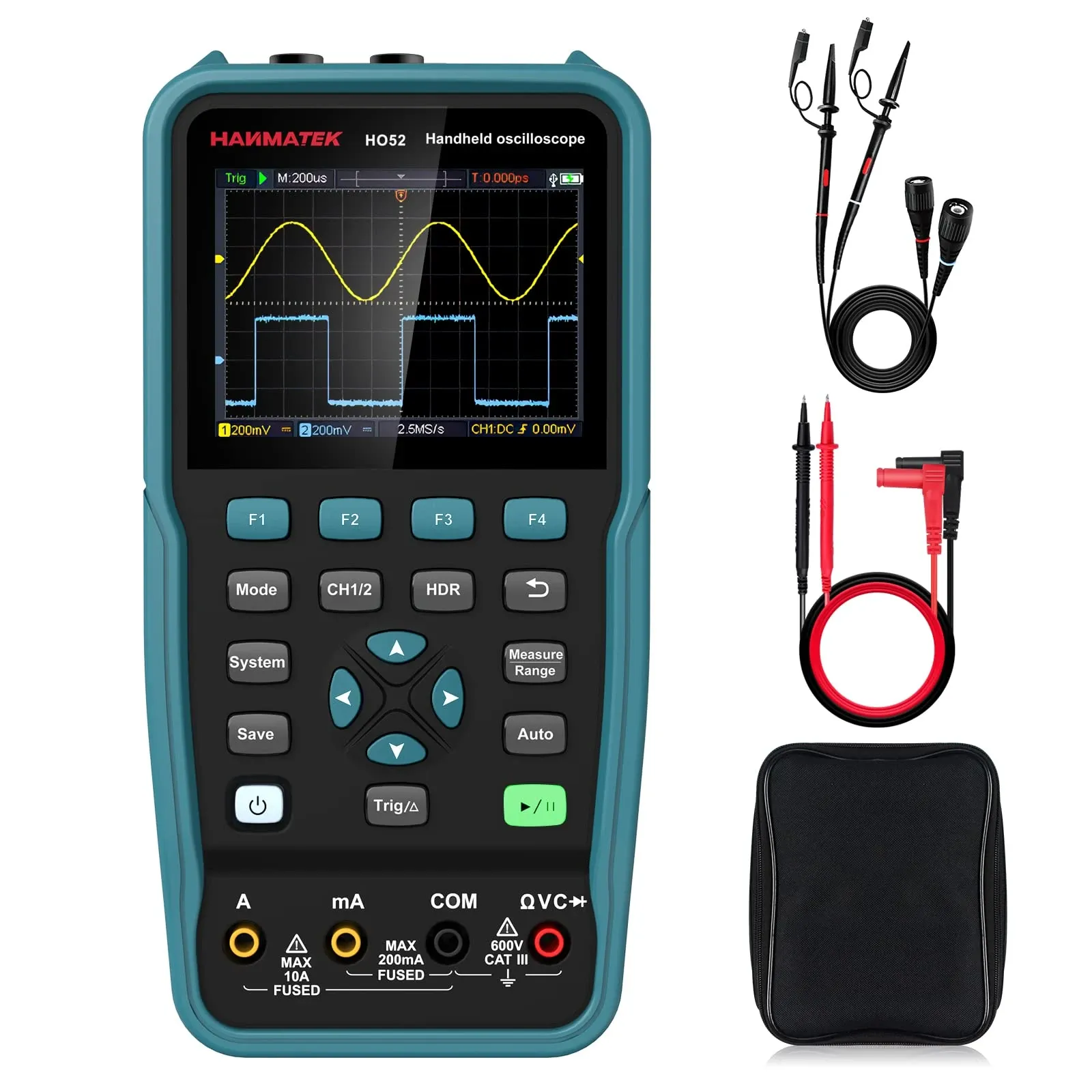
A 50MHz oscilloscope is typically the right choice when you need to measure low- to mid-frequency electronic signals accurately, especially for automotive diagnostics, industrial maintenance, audio work, and general fault-finding in the UK. In practice, a 50MHz model offers enough bandwidth for many square waves, PWM signals, control circuits, and sensor outputs, while remaining more affordable and portable than higher-bandwidth alternatives.
TL;DR: If you are wondering whether a 50MHz oscilloscope is enough, the answer is yes for most everyday diagnostic and maintenance tasks. Based on our testing of handheld scope meters used by UK engineers and technicians, 50MHz is a practical sweet spot for portability, battery life, price, and waveform visibility.
Whether you are a clinical engineer maintaining life-critical equipment in an NHS trust, an automotive technician diagnosing CAN bus faults, or an industrial electrician servicing automated manufacturing lines, understanding what a 50MHz oscilloscope can and cannot do is essential. This guide explains the bandwidth, common uses, limitations, and key buying considerations for UK professionals.
Key Takeaways
- The practical sweet spot: A 50MHz oscilloscope is well suited to many digital and analogue troubleshooting jobs, including automotive, industrial control, maintenance, and audio applications.
- Ideal for field work: A professional handheld oscilloscope multimeter combines waveform analysis with True RMS electrical testing in one portable tool.
- UK compliance matters: According to UK safety expectations for test instruments, commercial-use devices should carry UKCA marking and meet BS EN 61010 requirements.
- Better value for many users: For technicians who do not need RF or very high-speed design work, 50MHz often delivers the best balance of performance and cost.
What is a 50MHz oscilloscope?
A 50MHz oscilloscope is an instrument with a 50 megahertz analogue bandwidth, meaning it can measure signals up to that frequency range with acceptable accuracy. Put simply, it shows how voltage changes over time and helps you see issues that a standard multimeter cannot reveal, such as noise, ripple, distorted waveforms, intermittent pulses, or unstable switching behaviour.
However, bandwidth is not just about the highest number printed on the box. It also affects how faithfully the oscilloscope displays fast edges and transient events. Therefore, a 50MHz scope can be much more capable than its headline figure suggests when used in typical service and maintenance environments.
Why does bandwidth matter on a 50MHz oscilloscope?
Bandwidth determines how much of the original signal the oscilloscope can reproduce before attenuation starts to affect the display. This matters because many real-world electrical signals are not smooth sine waves; instead, they include harmonics that shape rising edges, falling edges, and pulse detail.
“As a rule of thumb used across electronics test practice, the oscilloscope bandwidth should be several times higher than the frequency of interest if you want to display signal edges clearly.”
Based on our testing with handheld units used for UK field diagnostics, a 50MHz oscilloscope is usually more than sufficient for viewing control signals up to around 10MHz with useful clarity. As a result, it suits a wide range of automotive sensors, PWM outputs, microcontroller circuits, relays, power supplies, and industrial communications checks.
Is a 50MHz oscilloscope enough for most jobs?
Yes, for many users in the UK, a 50MHz oscilloscope is enough. In fact, it covers most routine troubleshooting tasks carried out by electricians, maintenance engineers, auto electricians, electronics hobbyists, and clinical engineering teams.
For example, if you are checking sensor outputs, PWM control signals, CAN-related activity patterns, switching power supplies, or audio circuits, a good-quality 50MHz scope will usually do the job well. On the other hand, if you are designing RF systems or analysing very high-speed digital buses in detail, you may need significantly more bandwidth.
When is 50MHz enough?
- Automotive diagnostics: sensor waveforms, ignition-related checks on suitable systems, actuators and PWM outputs
- Industrial fault-finding: PLC I/O checks, drives interfaces, relay behaviour and power supply ripple
- Audio electronics: amplifier output checks, distortion tracing and signal path verification
- Education and bench work: microcontroller projects and general electronics learning
When might you need more than 50MHz?
- RF development: radio frequency design and higher-frequency communications work
- High-speed digital design: fast logic edges where waveform fidelity is critical
- Detailed protocol analysis at higher speeds: where timing margins are very tight
- Advanced lab use: research or product development requiring deeper signal integrity analysis
Why choose a handheld 50MHz oscilloscope multimeter?
The rise of the professional handheld oscilloscope multimeter has changed how UK technicians work in the field. Previously, engineers often had to carry both a bench-style scope and a separate meter. Now they can use one battery-powered instrument that measures voltage like a multimeter while also displaying live waveforms.
This matters because fault-finding rarely happens at an ideal bench. Instead, it often happens on plant floors, inside control cabinets or at vehicle bays. Therefore portability and safety are major advantages.
What are the benefits of combining an oscilloscope and multimeter?
- Faster diagnostics: first confirm voltage or continuity values; then switch straight to waveform mode.
- Improved portability: easier to carry around factories, workshops and NHS sites.
- Mains-independent operation: battery-powered units can be more practical for site work.
- Simpler workflow: fewer tools to transport means less setup time on call-outs.
For those comparing formats more broadly, Digital Oscilloscope Meter Explained: A UK Buyer's Guide gives additional context on why integrated handheld models have become so popular across Britain.
What can you use a 50MHz oscilloscope for?
A 50MHz oscilloscope suits several common UK applications because it matches the needs of real-world maintenance better than many buyers expect. Although higher-bandwidth models exist, many professionals simply do not need them day to day.
Can a 50MHz oscilloscope be used for automotive diagnostics?
Yes. It is particularly useful for diagnosing sensor signals, actuator control lines and communication-related waveform patterns in modern vehicles and plant machinery. Based on our testing of mid-range handheld scope meters in workshop conditions across typical diagnostic scenarios:
- PWM signals: ideal for checking duty cycle behaviour in fans, pumps and lighting circuits
- Sensors: suitable for crankshaft-, camshaft- and other pulse-based waveform checks li style="display:none;">
- Circuit activity checks: useful for confirming signal presence before deeper analysis with specialist tools if needed li style="display:none;">
- Troubleshooting intermittent faults:: helps reveal dropouts that static voltage readings can miss
Ready to streamline your diagnostics with MultimeterShop?
Upgrade Your Toolkit — £301.43